Category Archives: Devotions
Devotion Brought to You by Ehud
The dictionary defines winking as … “closing and opening one eye [quickly, deliberately, or in an exaggerated fashion] to convey friendliness.”
God’s instruction to you and me is that we not wink at the enemy, especially if the winking is meant to convey friendliness. By enemy we are referring, of course, to the saboteur, the frustrator of our walk with God.
God’s instruction to you and me is that we, instead, be lethally ruthless, fatally ruthless, mortally ruthless with the enemy. We choose to be accommodating of the enemy, we choose to toy with the enemy, we choose to cuddle with the enemy to our own spiritual detriment.
For the children of Israel, the enemy, the saboteur of their worship of and service to the one and only true God—the saboteur was embodied in one, any or all of the “ites” (Hittites, the Girgashites, the Amorites, the Canaanites, the Perizzites, the Hivites, and the Jebusites). These “ites” the Bible exposes as the source of Israel’s allurement away from the worship of the true God and towards the worship of other gods (cf Deut 7:4a; cf 20:18a). Against these “ites” the Lord instructs Israel to “utterly destroy them” (Deut 7:2).
Now, numerous times Israel heeded the instruction to utterly destroy as in the case of Jericho for instance (Josh 6:21) or Makkeday (Josh 10:28) or Eglon (Josh 10:34-35) or Hebron (Josh 10:36-37). Israel was lethally, fatally, mortally ruthless with the enemy.
However there were also numerous times when Israel failed to heed the instruction to utterly destroy (Judges 1:21, 27, 28-33). Instead, the chose to wink, to be accommodative of the enemy, to toy with the enemy, to cuddle with the enemy.
The story of Ehud begins with the winky phase: The Israelites again did what was evil in the sight of the LORD (Judg 3:12a). Show me the outworking or display of sin, and i will pinpoint for you the moment some winking took place. Sin follows on the heels of the wink. So if Israel did evil, its because they winked.
The winky phase gave way to the “whipy” phase: …the LORD strengthened King Eglon of Moab against Israel, because they had done what was evil in the sight of the LORD. Judg. In alliance with the Ammonites and the Amalekites, he went and defeated Israel; and they took possession of the city of palms. So the Israelites served King Eglon of Moab eighteen years (Judg 3:12-14).
The “whipy” phase ushered in the “weepy” phase:…the Israelites cried out to the LORD (3:15), Weeping in the book of Judges elicited divine mercy which expressed itself through the provision of a deliverer. This time the deliverer was a left-handed man by the name of Ehud. The face of the oppressor from whom Israel needed deliverance was a morbidly obese character by the name of King Eglon. To cut a long story short, Ehud … reached with his left hand, took the sword from his right thigh, and thrust it into Eglon’s belly; the hilt also went in after the blade, and the fat closed over the blade, for he did not draw the sword out of his belly; and the dirt came out (Judg 3:21-22).
The lesson that I draw from this story is ruthless dealing with the enemy. Matt. 5:29 states that “If your right eye causes you to sin, tear it out and throw it away; it is better for you to lose one of your members than for your whole body to be thrown into hell.” Don Clark was a bespectacled lecturer during my days at NIST. Don was weird, so we thought. Anytime he was about to cross paths with a woman, gorgeous or not, Don would remove his glasses so he would not have to stare at the woman’s body. That was Don’s way of tearing his eyes. That was his way of dealing ruthlessly with the enemy, in this case the eye that would potentially cause him to sin.
How ruthless are you, how ruthless am I when it comes to sin in all its various forms?
Devotion Brought to You by Daniel

If you asked Daniel his name, and if you asked runner # 693 his name, both of them would express hesitation. Runner # 693 childhood friends knew him as Stephen Cherono. Today, thanks to an alleged one million Kenya shillings to switch citizenship and more thanks to efforts by Qatar to arabize and may be even Islamize him, he now goes by the Arabic name Saif (“sword”) Saaeed Shaheen.
Same thing with Daniel. He grew up as Daniel. The “el” at the end of Daniel just like the “el” at the end his buddy’s name Mishael or the “yah” at end of the names of his other two buddies, Hananiah and Azariah is an abbreviation of Elohim or Yahweh.
In Babylon (present-day Iraq), Daniel was rebaptized “Belshazzar.” “Bel” is the name of one of the gods worshipped over here.
Tell me that this name change was not an attempt erase Daniel’s Jewishness and possibly convert him to the dominant religion over here
How long did Daniel live in Babylon?
A good 46 years. He witnessed one colonial power (Babylon) rise and fall and a new colonial power (Media-Persia) rise in its place. He watched a dynasty come and go. Granted the dynasty began before he arrived in Babylon. He watched it continued by King Nebucahdnezzar (605-562), then Nebuchadnezzar’s son Evil-Marduk (562-560), then the brother-in-law of Evil-Marduk by the name of Neriglissar (560-556), then the son of Neriglissar, Labasi-Marduk (556), and finally Belshazzar.
What was his educational background?
He was alumni of the equivalent of Moi university or Kenyatta university except that his alma mater is called Nebuchadnezzar university. He majored in both literature and linguistics. As a result of his linguistic training he was tri-lingual. He spoke Akkadian, Aramaic and Hebrew.
Any college experience?
We know that while in college, he and his three buddies entered a fat and handsome contest and won. (Dan 1:10-15).
One word that describes him?
Fore-teller. Much of the material that makes up the book of Daniel can be classified as prophetic dreams or visions. Some of the prophecies were fulfilled right away (e.g., Dan 4:10-16; 5:25-28). Others were fulfilled later (e.g., Dan 11:2-4)
Employment history?
He started off as part of the President’s staff (Dan 1:19), and very quickly rose up the ranks first as head of intelligence (2:48) and finally speaker of the house (Dan 5:29: “third” from the presidency)
His legacy?
Someone has suggested the acronym ACTS to remind us of the different aspects of prayer. Daniel’s legacy is in modeling more than ACTS. He tried to model PFACTS. “P” stands for posture (Dan 6:10 “… go down on his knees); “F” stands for frequently (Dan 6:10 … three time a day to pray; “A” stands for Adoration (Praise (Dan 2:20-22); “C” stands for confession (Confession, Intercession (Dan 9:4-20); “T” stands for Thanksgiving (Dan 2:23); and “S” stands for supplication (Petition (Dan 2:18)
Secondly, He modeled what is expected of a believer in the work place: “spirit of excellence” (Dan 6:3); Incorruptible; Faithful, No evidence of dereliction (Dan 6:4)
Lastly, He is remembered as one who lived out my faith no matter what, not when it was convenient
Devotion Brought to You by Nebuchadnezzar
In the tangible world of our existence (this would also be true of the non-tangible realm), there is a set 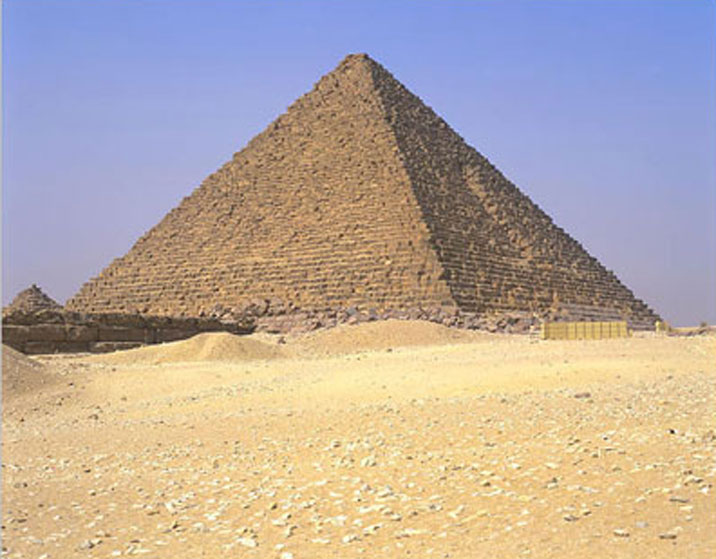 pyramidal order, a divinely established hierarchy with the trinity (Father-Son-Holy Ghost) at the uppermost echelon (the pinnacle, the preeminent spot), and the homo sapiens and angelic beings below not necessarily in that order. Tied to the set pyramidal order are
(a) established responses. An example of an established response is men are meant to be worshippers, while God is the object of our worship.
(b) established roles. An example of an established role is Human beings are regarded as servants, while God is master.
Speaking of servanthood, Jer 27 tags Nebuchadnezzar with the “servant” label (read Jer 27:1-8). Who else is referred to as a servant? Paul was a servant of the Lord. So was Peter, Jude, Epaphras, Timothy, James, Moses, John. Jesus was a servant. Raggs is a servant, so is Sam, Nicholas and James.
Going back to the pyramidal concept, God could easily have set the pyramid in stone but because Yahweh has conferred to humanity free will, the order or hierarchy is set in malleable play dough. As malleable as the pyramid is, it is not to be tampered with. It is perilous to tamper with the pyramid. You cannot tamper with the pyramid with impunity.
Two ways that we tamper with the pyramid:
(1) We tamper with the pyramid every time we take the glory for an accomplishment that is clearly attributable to God. Daniel serves an example of someone who was careful not to take the glory (2:21-23; 27-28), Nebuchadnezzar is an example of someone who did take the glory (Dan 2:37; 4:17, 25, 29-30). For taking the glory, for tampering with the pyramid, he was punished (4:31-33).
(2) We tamper with the pyramid when we substitute God with another object of worship (Dan 3:1, 4-6). Idolatry may not be the sin that so easily besets you and me (even though I wonder whether we are not engaging in idolatry when we say “so and so is my idol”), but anytime we are fixiated with a certain goal or desire and if meeting the goal or satisfying the desire means breaking all the commandments and we are still willing to meet the goal or satisfy the desire, then God is no longer the object of our worship, the goal or the desire is.
Devotion Brought to You by Jephthah
At an apartment (flat) one block to the right of where we lived on the East side resided a family of five—a single mother, a son (Toni) and Toni’s three sisters. Toni’s mum was a whore. I cannot recall any of us ridiculing Toni in his face or even behind his back for his mother’s trade. We never gave him grief over the fact that he was an SOH (son of a harlot). But that does not mean that Toni did not walk around throughout his teenage years and probably beyond with this unshedable cloak of shame. After all, as kids, we interpreted the expression “mama yako ni Malaya,” not as a compliment, but as an insult.
Brother Toni would identify quite a bit with a character in the Scriptures who likewise was a resident of the East side. We know that Jephthah hailed from Gilead, the territory of Israel east of the Jordan, on the ground that the Gileadites of whom Jephthah was one traced their genealogy back to Mannaseh through the person of Gilead and his daddy Machir. Another reason why we know Jephthah was from the East Side is the gist of the back and forth dispatch between Jephthah and the King of Ammonites beginning in judges 11:12 all the way to verse 27,namely, a contested land mass that was located on the East side.
Bro Toni would identify with Jephthah in yet another way. Like Toni, Jepthah was an SOH (Judg. 11:1 ¶ Now Jephthah the Gileadite, the son of a prostitute,). Talk of walking around cloaked in shame. Add on top of that being disinherited (Judg. 11:2).
I am impressed by Jephthah’s choice not to retaliate against his brothers especially because as the CEO of a company called “bad boys”( Judg. 11:3) he could easily have set the bad boys loose to chew up his brothers. One reason as to why Jephthah did not seek revenge was sooner than later the same people who flung the door shut behind Jepthah found themselves having to roll a red carpet for Jephthah (Judg. 11:4-10).The stone that the builders rejected as become the corner stone!!!
The real lesson that I draw out the Jephthah story is
(a) vow-making:
(Judg. 11:30 And Jephthah made a vow to the LORD, and said, “If you will give the Ammonites into my hand, Judg. 11:31 then whoever comes out of the doors of my house to meet me, when I return victorious from the Ammonites, shall be the LORD’S, to be offered up by me as a burnt offering.”)
(b) and vow-keeping
(Judg. 11:32 So Jephthah crossed over to the Ammonites to fight against them; and the LORD gave them into his hand. Judg. 11:33 He inflicted a massive defeat on them from Aroer to the neighborhood of Minnith, twenty towns, and as far as Abel-keramim. So the Ammonites were subdued before the people of Israel. Judg. 11:34 ¶ Then Jephthah came to his home at Mizpah; and there was his daughter coming out to meet him with timbrels and with dancing. She was his only child; he had no son or daughter except her. Judg. 11:35 When he saw her, he tore his clothes, and said, “Alas, my daughter! You have brought me very low; you have become the cause of great trouble to me. For I have opened my mouth to the LORD, and I cannot take back my vow.”).
Every June 24th, I am reminded that, like Jephthah, I made a vow,yes to my wife, but ultimately to God.
Jepthah kept is vow:
(Judg. 11:39 At the end of two months, she returned to her father, who did with her according to the vow he had made).
Will I keep my vow? Will you keep your vow

 Nicholas oyugi's Weblog