Category Archives: Papers Written
IMMIGRANTS IN THE BIBLE: LESSONS FOR BELIEVERS PRESENTLY LIVING IN DIASPORA
Introduction
How much a reader identifies with a particular aspect of Scripture depends on the extent to which the reader has actually experienced that facet. The less the overlap between a text and the reader’s experience, the less the reader will identify with the verse. Conversely, the greater the overlap between the text and the reader’s experience, the more the identification.
This linkage or lack thereof between experience and identification ought not to be confounded with reader response hermeneutics. In the latter, the reader’s experience shapes his or her interpretation. In the former, the reader’s repertoire of experience, while it does not correlate with his or her ability to understand or interpret, either enhances or dilutes his or her appreciation.
In the same way that, for instance, the story of the betrayal of Jesus will resonate with one who has experienced betrayal or a woman who has experienced vaginal birth will identify with biblical references to birth pangs, I find myself riveted to stories of immigrants in the bible for the simple reason that I too am an immigrant. I invite my fellow aliens to join me in a discussion of immigrants in the Bible; circumstances surrounding their immigration and lessons and principles that they present us based on their experiences abroad. First in our list is an “Iraqi” (ancient Ur of the Chaldeans or Mesopotamia) triad whose ultimate destination even though they did not know until they arrived was a region that includes present-day Israel.
The Triad of Abraham, Sarah, and Lot
Circumstances Surrounding their Immigration
Not many of us would claim to have been recipients of a crystal clear divine address instructing us to proceed abroad and tying our obedience with promises of massive lineage, name recognition, and translation into a conduit of blessing as was the case with Abram (cf., Gen 12:1). Similarly very few of us, if any at all, boarded our means of transport without knowledge of what county we were heading to as was the case with Abram (see Heb 11:8).
Having said that there are some who, even though they may not claim to have heard the voice of God’s, will testify to the workings of God that transformed their immigration from a wish to reality. I remember making a deal with God that I would only travel if my wife also got a visa. I interpreted the visa issuance as the green light from heaven.
Speaking of spouse, there are those among us who dig Sarah in that like her they tied the knot with their sweethearts at home and then accompanied their spouses or there are those who feel Lot in the sense that like he they accompanied a relative abroad. A far bigger percentage of us are able to sympathize with the psychological struggle and emotional turmoil that the twosome would have gone through in their decision to move away from a surrounding that they had gotten used to and settled in for at least sixty years. Abraham was seventy-five years old when he left for Canaan (Gen 12:4). Sarah was ten years his junior (Gen 17:17). Even more torturous is the realization that Abraham’s daddy, Terah, passed away while Abraham was abroad (cf. Heb 11:32) and there is no evidence that the son experienced the closure like one would if he or she goes back for the funeral or sits over the grave and cries to tearlessness. How my heart goes out to Abraham. While overseas we lost our third born brother. Sometime later our last-born brother passed away. About a year ago my mum slipped into eternity.
Lessons and Principles
There is time to share space and time to amicably part ways
Whether the space is pastureland, as was the case with the triad of Abram, Sarai and Lot or a crib, as would be our case, how long the host continues to share space with a brand new arrival, who would most probably be a relative or an old acquaintance, depends on how soon the stay hits the tipping point. For the triad, the deal breaker was strife caused by too much livestock in too little pastureland (Gen 13:6-7). For us the tipping point may be any number of things—the guest’s unwillingness to share in domestic chores or, when able, failure by the person being hosted to contribute financially towards the day-to-day household expenditures, feelings of “suffocation” because the visitor is overstaying his or her welcome, growing signs of contempt bred by familiarity, etc.
The challenge posed to us by the triad is to part ways with the person we have been hosting without jarring the relationship. A sure way of ensuring that the relational ties remains intact is to foster the necessary conditions that will allow for soft-landing for the guest on his or her way out. Abraham soft-landed Lot when he allowed him to go first in choosing the land that he would settle in (Gen 13:9).
Twice I have hosted a relative and in both instances I did provide a soft-landing for the individuals on their way out. I did not part ways with the guests until they found another place to move into. I was willing to part with items such as utensils, sheets, and blankets that I knew my departing guests would need as they settled in their new location. Because I fostered the conditions for soft-landing my relationship with these two individuals has remained intact and healthy.
Deception for the sake of self-preservation spells JEOPARDY
If you haven’t lied of late, it may just be that your existence has not been threatened. The truth of the matter is that we are most tempted to lie when our own survival is at stake. The sole reason for Abram pulling wool over the eyes of Egyptians was self-preservation (Gen 12:12-13). Unfortunately, while the fraud may win you a new lease in life, it does place other aspects of your life in jeopardy. Abraham lived to see another day but he faced the possibility of living the rest of that life without his wife who were it not for God’s intervention would have become Pharaoh’s wife.
Think of all the lies that some of us have engaged in abroad when things dear to us as life itself have threatened to slip away from or elude us; such things as the opportunity to work or the chance to regain, maintain, or upgrade legal status. Now think of what we have placed at risk as a result of our lies. Misrepresenting your status to gain employment may earn you the money that you desperately yearn for but it does block employer-based path to permanent residency since you can’t have your cake and eat it too. As a believer divorcing your spouse in order to marry a citizen causes both you and the divorcée “to commit adultery.” (Matt. 5:32; Luke 16:18). Not to mention that if the ruse is uncovered you risk being fired, incarcerated, or even repatriated.
A Homeward Orientation inclines us to tune in to the news at home
Whether we tune in to or tune out the current affairs at home depends on whether we continue to possess or have lost a homeward orientation. In the person of Abraham, homeward orientation manifested itself in his strong desire, which he was careful to make known in his last will and testament, that his son Isaac only marry a woman from his homeland (Gen 24:1-4). Little wonder then that Abraham had his ear on the ground long enough to know the latest update on the family situation of his brother (Nahor) back at home (Gen 22:20-22). This update was crucial because as it turns out Bethuel, one of the several sons born to Nahor, became a father of a girl (Rebekah) who later on would become the wife of Isaac and in so doing fulfill the desire that Abraham had expressed in his will.
Homeward orientation for many of us exists for the simple reason that we still have loved ones back at home. Because of the presence of these loved ones at home we find ourselves continuously praying for the prosperity of our homelands since in the words of the prophet Jeremiah “in its welfare” our relatives will find their welfare (Jer. 29:7). Besides praying we call or text or facebook or google just to know what’s going down at home.
Declare your preferred burial location whether abroad or at home
All of us abroad will be buried either at home or in Diaspora. The question is whether we will have made our preference known prior to passing on. By not making our preference known before death we are delegating the decision-making process to someone else. Abraham seems to have made the decision for Sarah (Gen. 23:19) and by purchasing a burial ground he may have tipped his hand as to his preferred burial location, viz, abroad (Gen 23: 17-18).
Joseph
Circumstances Surrounding his Immigration
Unlike his great grandfather Abraham who embarked on his trip abroad voluntarily, as a married and a much older man, Joseph arrived in Egypt single and barely eighteen. Did you arrive abroad single and young? Having arrived abroad single, did you then marry a native of your new residence (Gen 41:45), bore children with him or her (v. 50) and learned the language of your adopted home (42:23)? Then Joseph is your parallel. Did you show up abroad against your will? Then you are indeed Joseph-like seeing that according to Joseph’s own characterization and the narrator’s account, he was a victim of kidnap (Gen 40:15) and was forcibly transported as a slave (37:27-28) much like the victims of transatlantic slavery who were shipped against their will from Africa to the Americas and Europe in the 1400s onwards.
Lessons and Principles
We can rely solely on God for our success at our station abroad
The “world” that 1 Jn 2:15-16 beseeches us not to love (“… all that is in the world—the desire of the flesh, the desire of the eyes, the pride in riches—comes not from the Father but from the world”), Rom 12:2 urges us not to conform to and James 4:4 warns us not to befriend (“Adulterers! Do you not know that friendship with the world is enmity with God? Therefore whoever wishes to be a friend of the world becomes an enemy of God”)—that world would have us believe that the highway to success consists of a single lane along which an eye-catching billboard stands with the following neon message: “ success through all means necessary however unorthodox.” On the other hand, the Bible in general and the story of Joseph in particular, uncovers and points us to an alternate lane
 above which is calligraphed the countering dictum “ choose to rely on God instead.”
In each of the three stations that Joseph finds himself, the Bible records that, yes, he experienced success but more relevantly the success is considered the event with God as the cause. As a domestic worker in Portiphar’s residence, “the Lord was with Joseph, and he became a successful man” (Gen 39:2, cf. vv 3-4). As a convict in the King’s prison “… the Lord was with him; and whatever he did the Lord made it prosper” (39:23). At the top of his game as a civil servant, Joseph testifies as such: “… God… has made me a father to Pharaoh, the lord of all his house and ruler over all the land of Egypt” (Gen 45:8).
Reliance in God is not incompatible with our responsibility to take the necessary and orthodox steps to enhance our success at our station abroad
As much as the Bible attributes Joseph’s success to God, the same Bible paints a picture of a Joseph not passively waiting on God for a job but actively taking two necessary and orthodox steps that enhance anybody’s chances of both getting and staying hired.
One of the steps is networking. The dictionary defines networking as the act of cultivating “people who can be helpful to one professionally, especially in finding employment or moving to a higher position.” It all boils down to developing friendships and establishing rapports with people around you. The conversation that Joseph struck with a downcast baker while the two were confined (Gen 40:7) and the relationship that this rapport must have ushered proved advantageous to Joseph later on when the now reinstated baker sensed the need to return a favor by mentioning Joseph favorably to the King (Gen 41:9).
The other step is providing your potential boss with a cogent reason as to why the company will benefit from your hire. In the case of Joseph his God-given ability to interpret dreams earned him an audience with the King (Gen 41:14) and his astute proposal in light of the forthcoming drought so impressed the King hired him as the CEO of the “famine curbing initiative” (vv 33-44).
Our success abroad should translate into our assisting our families and relatives at home
A report by the World Bank and African Development Bank on remittances to Africa from Diaspora clearly shows that I am really preaching to the choir on the issue of the Diaspora providing assistance to families and relatives at home. African countries received a staggering US $406 billion from remittances from abroad in 2010, the largest net inflow of foreign funds after Foreign Direct Investment. To this end we are most Joseph-like in the sense that Joseph leveraged his influence and success to facilitate the exodus of Jacob (Israel) and his seventy descendants away from famine-ravished Canaan to the bread basket of the world at that time.
The Rest of the Jacob family and the generations following
Circumstances Surrounding their Immigration
With reports of famine in certain parts of the world, it should not surprise us that, as was the case with the Jacob family, food scarcity may be a reason why some of us headed abroad. Personally the decision to leave home was provoked by a paucity of a different sought, viz., scarcity of higher education opportunity due to unavailability of a preferred program (having obtained a Masters in Divinity and desiring to further my education possibly to a doctoral level neither of the two post-graduate schools offering theological degrees in my homeland at that time had in place a doctoral program). Lack of scholarship and imbalance between the number of qualified candidates and the enrollment capacity of the educational institutions are the other reasons why higher education is out of reach for many. A friend of mine was driven abroad by yet another kind of famine—scarcity of jobs. Despite having matriculated from a reputable university with a degree in architecture, he could not find a job
Lessons and Principles
Heads-up, anti-immigration sentiments are as old as Moses
Besides perennial racism, there are at least four moments when societies turn antipathetic towards the immigrant population in their midst: (a) times of  elevated unemployment rate resulting in competition for limited job openings (b) periods of budgetary strains leading to a scramble for social services (c) break out of war or hostility causing a build-up of suspicion of a particular immigrant group due to the existence of ethnic or religious ties between the group and the enemy (d) when the immigrant population approaches or turns majority raising fears of
 loss of cultural identity.
Exponential increase in the population of immigrants and the accompanying possibility of aliens joining forces with the enemy and effectuating their own exodus was the alarming factor some 300 years after the death of Joseph and the rest of the first generation immigrants to Egypt (Exod 1:9). In response Egypt sought to stem the alien population growth by initially subjecting the immigrants to harsh labor (1:11) and when this measure proved counter-productive, the King resorted to infanticide (1:16).
While the killing of the newborn as a measure of curtailing immigrant population is not on the table in America, it is interesting that groups that seek to freeze the number of immigrants who are eligible to vote seek to re-write the 1886 citizen clause of the 14th amendment so as to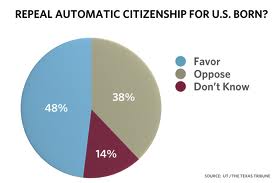 exclude infants born to a couple who reside illegally in the country.
Keep the faith, Our God is the God of the Exodus
Going with the general definition of a prison as “any place of confinement” Egypt became a  prison the moment her King betrayed his desire to thwart the possible departure of the Hebrew Immigrants (1:10). In the same way that the descendants of Jacob became victims of Egyptian internment, so do many immigrants abroad feel hemmed in their host countries by factors that include lack of airfare, unwillingness to relocate prematurely, and the recognition that their host countries will not reissue permission to come back. Exodus for these would take the form of financial ability to exit at the time of their choosing and the assurance of returning if they so desire.
The Quartet: Daniel, Hananiah, Mishael, and Azariah
Circumstances Surrounding their Immigration
The manner in which the Quartet arrived abroad compares with Joseph’s involuntary trip to Egypt. The four were part of the inhabitants of Judah forcibly carried away to Babylon after the Lord allowed Jerusalem and her King Jehoiakim to fall into the hands of Nebuchadnezzar. Jehoiakim alias Eliakim succeeded his brother Jehoahaz as King of Judah after the latter was deposed by Pharaoh Neco and taken away to Egypt in 608 BC (2 Kings 23:34). After three years of vassallage, Jehoiakim rebelled against Nebuchadnezzar (2 Kings 24:1). In turn Nebuchadnezzar came to Jerusalem, besieged it, and after it fell, confiscated some of the vessels of the temple and carried off a portion of the population (Dan 1:1-2) (cf. Jer 25:9) (Ezek 23:22-25). Where the trip of the tetrad differs from Joseph’s is the reason. Joseph was sold to slave traders out of hatred. The deportation of Judah was due to the sins of Manasseh (2 kings 24:3; cf 2 kings 21:1-17) and the wickedness of Judah as a whole (Jer 25:5-7; cf Ezek 22: 6-15; 36: 17-19; 39:23).
Lessons and Principles
With God as the wind beneath our wings, upward mobility within our line of work is ours to experience
The foursome started off their career as trainees. Don’t we all? For some its on-the-job training or boot-camp. For others it’s a certification training program . For yet others its an associate or undergraduate degree. The prerequisite for admission to the State-sponsored training included perfect physique, handsomeness, knowledgeableness, a knack for code-cracking Intel, and insightfulness (Dan 1:4). The training itself was to last 3 years. The curriculum included Chaldean Literature and language. Scholarship was available in the form of free boarding, food and wine (Dan 1:5).
As a side note you know you are abroad if your name(s) is (are) subjected to any or all of the following treatments: (a) the nomenclature of the host country overrides yours (since I am “Nicholas Oyugi Odhiambo,” my tribe’s naming system calls for my wife and my kids to pick up only my middle name; yet my student visa reached me by mail with both my middle name and surname attached to her first name; she could just as well be married to my dad now), (b) mis-spelt (I can’t tell you how many time packages has arrived with my name mis-spelt as Odihambo), (c) mispronounced (the “dh” in Odhiambo is supposed to sound as “th” in the word “another” and not a “d” as in the word “door”), (d) shortened either because its too long or too hard to pronounce (so now they call me Mr “O”), or (e) replaced altogether by a local name, thereby camouflaging your original identity. Joseph was on the receiving end of this last treatment. Pharaoh renamed him Zaphenath-paneah. The Quartet were treated likewise. Daniel (“God is judge”) became Belteshazzar (a name associated with a Babylonian god (cf., Dan 4:8), Hananiah (“Yahweh has been gracious”) was renamed Shadrach, Mishael (“who is God”) was now being referred to as Meshach, and Azariah (“Yahweh has helped”) was forced to answer to Abednego. A modern-day example of name change is this gentleman: His childhood friends knew him as Stephen Cherono. Today, thanks to an alleged one million Kenya shillings for switching citizenship and more thanks to efforts by Qatar to arabize and may be even Islamize him, he now goes by the Arabic name Saif (“sword”) Saaeed Shaheen
Upon successful completion of their training, the four amigos were posted at the equivalent of the Office of the President. A year later, in a process only attributable to God, Daniel received his first promotion (Dan 2:48). This is how the God-engendered promotion went down. The Head of State experienced a dream whose meaning he could not unpack. Clueless about the meaning and thus vulnerable to deception by the government-employed code-crackers in the Department of Intelligence, the President tied the credibility of their interpretation to the verifiable challenge of correctly divining the content of his dream. Meeting this challenge served as the basis of Daniel’s promotion. But credit for the ability to meet this particular challenge was given to Deity both by the Babylonian wise-men (v. 11) and by Daniel himself (vv. 19, 28). Four Babylonian Presidents later, Daniel would receive yet another promotion. This time he would be elevated to a position two people away from the presidency– the equivalence of Speaker today (5:29). The basis for the promotion was his ability to decipher the meaning of mene, mene, tekel, parsin (vv 26-28). But even this time this ability is ultimately ascribed to “spirits of the gods” that indwelt Daniel (v. 14).
We should be willing to expose ourselves to harm, even bodily harm, in our determination to remain true to our walk with God
At the same time that Daniel received his first promotion, his three friends were similarly elevated on the strength of Daniel’s recommendation. But unlike Daniel who remained stationed at the King’s Palace (2:49), the trio was sent to the field as administrators. It was while they where out there that the President convoked his whole administration to a dedicatory event whose agenda, as pronounced by the Presidents via the Master of Ceremony, ran counter to the first two commandments. Rather than obey His Excellency and in effect break the commandments, the three, who at this point were being referred to by their given names, made the difficult choice of disobeying the King and by so doing expose themselves to serious harm (3:16-18). A number of decades later, Daniel would be faced with the same twin choices of either compromising his walk with God and escape harm or stay true to his walk with God and suffer harm. He chose the lion’s den instead (Dan 6).
Esther and Mordecai
Circumstances Surrounding their Immigration
Every immigrant can be classified as either second generation and beyond, meaning the person was born abroad or (b) first generation, indicating that the person personally undertook the trip abroad. The term 1.5 generation refers to minors who have made their way abroad usually in the company of an adult parent or relative. Most of the immigrants that have featured in our discussion so far were either first generation (e.g., Abraham, the Jacob family, Daniel and his three friends) or 1.5 generation (e.g., Lot, Joseph, Jacob’s little ones [Gen 46:5]). But we did come across a group that fits the category of second generation and beyond, viz., members of the lineage of Jacob who were born in Egypt. Prominent members of this group include Moses and his two siblings, Aaron and Miriam.
Like Moses in Egypt, Esther and Mordecai in Persia belong to the category of second generation and beyond. Specifically the two were fourth generation. Their respective dads (Abihail and Jair), who would have been third generation, were brothers. It was the grandfather of these two siblings who was first generation having being brought to Babylon as a captive alongside King Jeconiah in 598 BC by King Nebuchadnezzar.
Lessons and Principles
A tip on how to approach a job interview: Don’t ask, don’t tell
A vacancy arose for the position of First Lady to King Ahaseurus (aka Xerxes) following the dismissal of Queen Vashti (Esther 1:19-22). An advert went up. The qualifications were three-fold: young, beautiful, virgin (2:2). Believing that she fitted the bill, Esther answered the Ad most probably under her Persian name, Esther, not her Jewish name, Hadassah. And when it came to the interview itself, she followed her adopter-coach’s tip not to volunteer information about her Jewish background, revelation of which we can only suspect would have been an immediate disqualifier (v 10).
Advocates of Immigrants’ Rights and Welfare, please raise your hands
Look around and note whose hand is raised alongside yours. Moses has his hand up and rightly so. The marching orders he receives from Yahweh could not be any more advocative: “I have observed the misery of my people …; I have heard their cry on account of their taskmasters. Indeed, I know their sufferings, and I have come down to deliver them …, and to bring them up out … So come, I will send you to Pharaoh to bring my people, the Israelites, out of Egypt” (Exod 3:7-8,10). And my-my, did he leave up to expectation! Twelve times he and his brother appeared before Pharoah to demand release from captivity (5:1-4; 7:10-13; 20-23; 8:8-12; 25-30; 9:27-33; 10:3-6; 8-11; 16-18; 24-29; 11:4-8; 12:31-32).
Esther also has her hand raised. Frightened at first to step into the role of an advocate for the assignment sometimes carries with it a price tag that can be too high to pay, she finally did under the goad of her cousin Mordecai. Listen to her plead her case on behalf of her fellow immigrants: “If I have won your favor, O king, and if it pleases the king, let my life be given me—that is my petition—and the lives of my people—that is my request. For we have been sold, I and my people, to be destroyed, to be killed, and to be annihilated. If we had been sold merely as slaves, men and women, I would have held my peace; but no enemy can compensate for this damage to the king.” (Esther 7:3-4)
CRITIQUE OF SOME SELECTED TEACHING OF NAIROBI CHRISTIAN CHURCH (N.C.C) AND BY EXTENSION THE BOSTON CHURCH OF CHRIST (B.C.C) (PART 4)
(This posting is an adaptation of the author’s thesis submitted to the faculty of the Nairobi International School of Theology towards the fulfillment of a degree in Master’s in Divinity)
Presentation and Biblical Critique of the N.C.C. Teaching on the Kingdom of God
Presentation of the Teaching
The following are the pertinent citations coupled with observations:
1. Dan 2:24-45. The Kingdom would be set up during the Roman empire.
2. Isaiah 2:1-6. This will take place in the last days. All nations would flow to it. It will begin from Jerusalem. There will be conversion.
3. Joel 2:28-32. This will come to pass in the last days: the Holy Spirit will be poured on all flesh in Jerusalem and there will be deliverance.
4. Mt. 3:1;4:17. Jesus said the kingdom is near.
5. Mk:9:1. The kingdom would come during the disciple’s life time. At least one of them would be dead. The kingdom would come with power and it will come on earth.
6. Lk. 17:20-21. The kingdom is spiritual not physical.
7. Lk 23:46-25. At this point Jesus is dead and the kingdom hasn’t yet come as is evidenced by the fact that Joseph of Arimathea was still waiting.
8. Mt. 16:13-19. Peter will have the keys of the kingdom. Jesus talks of the church and the kingdom interchangeably.
9. Jn. 3:1-6. You enter the kingdom of God by being born again of water baptism and Spirit.
10. Lk 24:45-49. Repentance and forgiveness of sin is to be preached in Jesus’ name to all nations. The Holy Spirit is to be sent with power. This will take place in Jerusalem.
11. Act 1:1-9. Jesus talks of the promised things: the Holy Spirit and the kingdom.
12. Points one, five, six and eight were fulfilled in Acts 2 during the Day of Pentecost.
13. The kingdom of God is the Church. The true church is one that adheres to Christ’s teaching. All other churches do not adhere to the teaching of the Bible save the N.C.C. So the Nairobi Christian Church is the only true church. If you are attending any other “church”, then you need to start coming to the true “church”.
Biblical Critique of this Teaching
An analysis of the above points reveal that the coming of the kingdom of God is fulfilled wholly with the birth of the church. In other words, in the church, the kingdom of God finds its culmination. But is this true? A critical passage to analyze for the express purpose of ascertaining the point at which the kingdom of God will be established is Dan. 2:44 “And in the days of those kings the God of Heaven will set up a kingdom which will never be destroyed, and that kingdom will not be left for another people: it will crush and put an end to all these kingdoms, but it will itself endure forever (Dan. 2:44; N.A.S.V.) According to this verse the kingdom of God will be established in its most powerful and dominant form during the “days of the kings”. A close study of this phrase will furnish us with some of the data we need. As Wood in his commentary on Daniel rightly observes the text does not supply a clear antecedent for “these kings”, that is, no kings as such are mentioned in the prior context (Wood, Commentary on Daniel, p. 71). However, if indeed the version in Dan. 7 be a repetition of the Dan. 2 dream in a different form, then it should not be difficult to equate the ten toes of Dan. 2 to the ten horns of the beast in Dan 7 which according to Dan. 8:24 were interpreted as some ten kings. And if this were to be the case, then it is most probably that the phrase “these kings” refers back to the ten toes. In accordance with Daniel’s interpretation of Nebuchadnezzer’s dream coupled with some extra-biblical historical data, we know that the toes are to represent a kingdom other than the Rome of Jesus’ days – maybe a revived Roman Empire. The Rome of Jesus was represented by the iron legs of the statue in Dan. 2, the connotation of which was strength and power (cf. Dan. 2:40). In fact, at Pentecost, Rome was at its highest peak in terms of power and dominance. But, it had been prophesied that Rome’s dominance and strength would not. It would be weakened and divided (Dan. 2:42-43). Moreover, the mentioning of the ten kings who will arise and rule at the same time for one hour in Rev. 17:12, if taken as an allusion to the ten toes in Dan. 2, would suggest that the last kingdom in Nebuchadnezzer’s statue dream is still of the future. In short, we are saying that, since the days of these kings are still to come and that will be the time during which the kingdom of God is established in its culminated form, it is therefore wrong to assume that the kingdom of God portrayed in Dan. 2 was established earlier like the N.C.C. would propose. Moreover, as Wood comments, The text represents the rise of this new kingdom as being sudden and with a decisive blow, in which the immediately preceding fourth kingdom is obliterated; but nothing like this happened with the beginning of Christ’s spiritual kingdom. To the contrary, not only was Rome not destroyed at the time, but it came to its greatest strength well after Christ died; and, though Christianity did affect the Roman power extensively later on, still the impact was never sudden or crushing in force so as bring total destruction, as pictured by the stone crushing the image. This will be true, however, when Christ comes in power to the Mount of Olives (Zech. 14:6) to establish the millenial rule (Ibid. p. 72). As such, it is faulty observation to conclude from the Dan. 2:24-45 passage that the time of the establishment of God’s kingdom was at Pentecost. For Daniel, the establishment of the eschatological kingdom of God was to be in the future, probably at the millennium. The violent nature and the intensive force with which this kingdom is established definitely refers to the future eschatological kingdom of God which will come with a “cataclysmic divine intervention”. (Buzzard, “The Kingdom of God in Twentieth Century Discussion and the Life of Scripture”, p. 109). This will issue in a worldwide extension of the kingdom under messiah’s rule as all the prophets including Daniel prophesied (Ibid.). This is not to deny the inauguration of this kingdom at some earlier point. The above argument negates this first point of the N.C.C. teaching on the kingdom of God (which is that the kingdom would be set up during the reign of the Roman empire). Daniel has in mind, not the inauguration of this spiritual kingdoms, but the establishment of the eschatological kingdom of God which is the culmination of the spiritual kingdom.
But when was this spiritual kingdom actually inaugurated? Can we be dogmatic enough to contend that it was at Pentecost like the N.C.C. would like us to believe? It is difficult to determine and analyze the temporal orientation of the kingdom in our Lord’s teaching. There are passages that would imply that the kingdom is still future. But at the same time Scripture does seem to suggest that the kingdom of God is yet of the future. In order to support the assertion that the spiritual kingdom was established precisely at Pentecost, the N.C.C. have majored on passages like Matthew 3:1:4:17 and Mark 9:1 which suggest that the spiritual kingdom would not have been inaugurated during the life-time of Christ. However, in accordance with Willis’ observation of the kingdom theology, in the book of Luke alone, it does seem like the kingdom was somehow present during Christ’s lifetime. Jesus’ expelling of demons in Lk. 11:20 proves that the kingdom of God had come upon his audience (Willis, The Kingdom of God in 20th Century Interpretation, p. 154). Moreover the two growth parables of the mustard seed and of the leaven in Lk. 13:18-21 picture the kingdom of God as present in reality. Therefore, Willis concludes that there is no doubt that Luke and the gospel writers viewed this kingdom of God as in part, a reality (Ibid. p. 155).
It is observable that attempts have been made by the N.C.C. to equate the kingdom of God with the Church. But as Ladd himself dissents: the kingdom is primarily the dynamic reign or kingly rule of God, and derivatively, the sphere in which the rule is experienced. In biblical idiom, the kingdom is not identified with its subjects. They are the people of God’s rule who enter it, live under it, and are governed by it. The church is the community of the kingdom but never the kingdom itself…The kingdom is the rule of God; the Church is a society of men (Ladd, Jesus and His Kingdom, p. 258). Rather than equate the kingdom with the church, Ladd asserts that it is the kingdom that creates the church. The dynamic rule of God present in the mission of Jesus challenged men to response, thus creating the church (Ibid., p. 261).
Conclusion
At the core of the N.C.C. teaching on the kingdom of God is the assertion that since the kingdom of God is the church and the N.C.C. is the only true church, then the tripartite syllogism goes that they, i.e., the N.C.C.,solely constitute the kingdom of God. The reason for this self exaltation as was mentioned at the beginning of this paper, results from their claim that they are the only ones who teach biblical truth. But do they? We have seen that their teaching on baptism is overemphasized. Salvation is by faith in Jesus Christ and the place of baptism in the context of the whole process of salvation is that it is a public testimony of an inward change. Baptism has never been efficacious for the forgiveness of sins. We have also observed that their mode of discipleship falls short of the biblical mode. Biblically, a disciple is a believer who is then led to a point of maturity. But for the N.C.C., a disciple is a non-believer who is then led to a point of conversion. It is not true that Spirit baptism ceased with the Acts 2 and Acts 10 events. This assertion does great injustice to the I Cor. 12:13 passage which teaches that all believers are indeed ushered into the body by Spirit baptism. Lastly, we have pinpointed certain wrong observations that characterize the kingdom study as presented by the N.C.C. In light of these findings, it is unsound for the N.C.C. to maintain that they are the only true church on the basis that they are the only ones who teach biblical truth. They have errors and this paper has thus proved the above self-elevation as null and void–absolutely baseless.
Application
In the beginning of this paper we mentioned that it is our duty to shield other Christians from the devastating effects of false teachings. It is our responsibility to rescue our people from imbibition by manipulating groups. One of the ways to do this would be to expose the errors imbedded in these false teachings. This is one difficult task, the reason being that false teachers have the ability to blend truth with error very well. Of course the most sure way to shield our people from such teaching would be to ground them in God’s word. This we should do through discipleship. But at the same time we should not hesitate to expose and reveal various contemporary false teachings. It is with this in mind that we will seek a forum in which to share the findings of this paper. The most vulnerable groups are the youth groups who, for one, are just getting grounded in the word, but who are also the target group for the N.C.C. We will purpose to share with them the highlights of this paper which will go a long way to help them pinpoint the errors of the N.C.C. They can then be in a position to help other young Christians who would fall victim to the subtilities of the N.C.C.’s teachings.
BIBLIOGRAPHY
Behm, ” , etc. “, TDNT, 4:980-979. Blass, Fredrick. Grammar of New Testament Greek. Translated by Henry St. John Thackeray. London: Macmillan and Co., l911. Brooks, James A. Syntax of New Testament Greek. Washington, D.C.: University of Press of America, l979. Bruce, F. F. Answers to Questions. Exeter, England: Paternoster Press, l972. Buzzard, A. “The Kingdom of God in the Twentieth-Century Discussion and the Light of Scripture”, The Evangelical Quarterly. 64:2, (1992), 99-115. Calenberg, Richard D. The New Testament Doctrine of Discipleship. Dissertation. Winona Lak, IN.: Grace Theological Seminary, l981. Cannon, S. F. “Has Mind Control Come to Beantown?”, Personal Freedom Outreach, 9:2(1989):5-8. Criswell, W. A. The Baptism, Filling and Gifts of the Holy Spirit. Grand Rapids: Zondervan, l973. Edwards, Thomas Charles. A Commentary on the First Epistle to the Corinthians, 2nd edition. London: Hodder and Stoughton, l885. Fee, Gordon, D. The First Epistle to the Corinthians, NICNT. Grand Rapids, MI.:Eerdmans, l987. Flynn, Patrick. “Participles”. Class notes for BBL 322: Greek, taught at the Nairobi International School of Theology, Kenya, January to March, 1991. Gloag, Paton J. A. Critical and Exegetical Commentary on the Acts of the Apostles. Minneapolis, Minn.: Klock & Klock Christian Pub., l979. Goetchius, Eugune Van Ness. The Language of the New Testament. NY.: Charles Schribner’s Sons, l969. Greene, Oliver B. The Acts of the Apostles. Four volumes, Greenville, S.C.: Gospel Hour, l968-l969. Greenlee, J. Harold. A Concise Exegetical Grammar of New Testament Greek. Fourth edition. Grand Rapids: Wm. B. Eerdmans Pub. Co., l979. Grosheide, F. W. Commentary on the First Epistle to the Corinthians, NICNT. Grand Rapids: Wm. B. Eerdmans Publishing House Company, l976. Harlow, R. E. The Imperfect Church: I Corinthians. Canada: Everyday Pub. Inc., l982. Hearbeck, Hermann. ” ” “in old, etc.”, NIDNTT, 2:713- 716. Ironside, H. A. Addresses on the First Epistle to the Corinthians. NY.: Loizeaux Brothers l978. Kearsay, R. “Repentance”, The New Dictionary of Theology, edited by Sinclair B. Ferguson and David F. Wright. Downers Grove, IL.: Intervarsity, l988. Kromminga, G. C. “Repentance”, EDT. Ladd, George Eldon. Jesus and the Kingdom: The Eschatology of Biblical Realism. London: SPCK, l966. Larson, Bob. Larson’s Book of Cults. Wheaton, IL.: Tyndale, l982. Luter, Boyd,A. Jr. “Discipleship and the Church”, Bib Sac, 137:545(1980):267-273. MacArthur, John F. First Corinthians. Chicago: Moody Press, l984. McKean Kip, “Revolution through Restoration”, Upside down, pp 7-14. Moulton, James Hope. A Grammar of New Testament Greek. Prolegomena. Edinburgh T & T Clark, l978. Murray, J. “Repentance”, NBD, 2nd ed. Nunn, H. P. V. A Short Syntax of New Testament Greek. Cambridge: Cambridge University Press, l930 Rengstorf, H. K. ” etc.”, TDNT, 4:461. Robertson, A. T. Word Pictures in the New Testament in 6 Volumes. Nashville: Broadman Press, l930-l931. Robertson, A. T. A New Short Grammar of the Greek Testament. Grand Rapids: Baker Book House, l979. Robertson, Archibald. A Critical and Exegetical Commentary on the First Epistle to the Corinthians,ICC. Edinburg: T & T Clark, l950. Scaer, D. P. “The Relation of Matthew 28:16-20 to test of the Gospel”, Concordio Theological Quarterly, 55:4(1991): 245-266. Unger, Merrill F. The Baptism and Cults of the Holy Spirit. Chicago: Moody Press, l974. Vincent, Marvin P. Word Studies in the New Testament. Massachusetts: Hendrickson, l988. Warns, Johannes. Baptism: Studies in the Original Christian Baptism. Translated by E. G. Lang. Minneapolis, MN.: James and Klock, l957. Willis, Wendell The Kingdom of God in 20th Century Interpretation. Peabody, MA.: Hendrickson, l987. Wood, Leon. A Commentary on Daniel. Grand Rapids: Zondervan Pub. House, l979.
CRITIQUE OF SOME SELECTED TEACHING OF NAIROBI CHRISTIAN CHURCH (N.C.C) AND BY EXTENSION THE BOSTON CHURCH OF CHRIST (B.C.C) (PART 3)
(This posting is an adaptation of the author’s thesis submitted to the faculty of the Nairobi International School of Theology towards the fulfillment of a degree in Master’s in Divinity)
Presentation and Biblical Critique of the N.C.C.’s Teaching on Holy Spirit Baptism.
Presentation of the teaching
For the N.C.C., the purpose of the Holy Spirit baptism was primarily to “usher in the kingdom of God”. And so we have Holy Spirit baptism in Acts 2 to usher the Jews into the Kingdom of God and another Holy Spirit baptism in Acts 10 to usher the Gentiles into the Kingdom of God after which the baptism of the Holy Spirit ceased, the reason being that after Acts 10, both the Jews and Gentiles had now been ushered in. Therefore, these days we do not need the baptism of the Spirit because its function is done away with. Moreover Eph. 4:5 talks of one baptism which is neither John’s baptism nor the Holy Spirit baptism but water baptism.
Biblical Critique of this Teaching
If the N.C.C. is going to insist on “locking” Spirit Baptism behind the room occupied by the 120 disciples in Acts 2 and Cornelius’ house in Acts 10, then the most arduous task that they have is to explain away the one and only New Testament passage that is purely doctrinal in nature and has direct reference to Spirit baptism. This is I Corinthians 12:13 which reads, “for we were all baptized by one Spirit into one body-whether Jews or Greeks, slaves or free and we were all given the one spirit to drink”. The immediate context of this verse is the subject of the various spiritual gifts–diverse, yes–but issuing from the same source. Already Paul had hinted this subject in his introductory remarks at the beginning of the book (cf I Cor. 1:7). But now he elaborates more on this subject with the hope of patching up the division that had characterized the Corinthian church. Beginning in verse 4 of chapter 12, he affirms that there are different kinds of gifts, but the unity is in the source. To drive this point home, Paul then offers a simple illustration in v. 12: “the body is a unit though it is made up of many parts; and though all its parts are many, they form one body….” One of the possible interpretations of the last phrase in v. 12, “so it is with Christ”, would be that as the person is one while the members of his body are many, so also Christ is one but the members of the mystical body, the church, are many (Edwards, A Commentary on the First Epistles to the Corinthians, p. 321). This is not without the support of another commentator: ” The definite article (the) is found in the original…when the apostle uses the term ‘the Christ’, it is just the same as if he said, ‘The Church’, for as the context shows, he is thinking of the entire church as linked with the Lord Jesus Christ, its head in heaven. As the human body is one, so also is the Christ” (Ironside, Addresses on the First Epistle to the Corinthians, p. 388)
In verse 13a, we come across some very crucial observation (a) The word “body” here should be understood to refer to the universal church. An approximate phraseology is used in v. 27 which says “now you are a body of Christ”, where it has a localized meaning (Grosheide, Commentary on the First Epistle to the Corinthians, NICNT, p. 297). But as used in verse 13a, the word “body” definitely has a reference to the universal Church. (b) There is a universalistic overtone observable from the grammatical structuring of this verse. From the original language, this verse should be translated “for by one Spirit are we all baptized into one body…” The overlaid emphasis here has significance. There is an “all-inclusiveness stressed here so emphatically” (Unger, F. Merrille, The Baptism and Gift of the Holy Spirit p. 100). (c) Moreover the mentioning of the Greeks and Jews, the slaves and the free support the universality of this verse according to the International Critical Commentary, … the racial difference between Jew and Greek was a fundamental distinction made by nature; social difference between slave and freeman was a fundamental distinction made by custom and law; and yet both differences were to be done away when those who were thus separated become members of Christ. (Robertson & Plummer, I Corinthians ICC, p. 272) (d) The first aorist passive indicative of the Greek word for baptism here refer to a definite past event. The agent of this baptism is the Holy Spirit. That is why it is referred to as Spirit baptism. According to Criswell, one of the possible translation of the proposition ” ” in the phrase ” ” would be “by” thus connoting agency. Quoting him, he argues that: The Greek preposition translated…”by” is the Greek word “en”. Thayer’s Greek Lexicon of the New Testament lists 44 different uses of this preposition “en”…. The word “en” can be translated “by” as it is in Mt. 17:27, 28:21:23, 24; 23:16-22; Acts 4:17; Romans 5:9, 10;12:21; Rev. 13:10…(Thus) the baptism is done by the Holy Spirit. (Criswell, The Baptism of Filling and Gifts of the Holy Spirit pp 21-22) (e) This Holy Spirit baptism is (into one body) and this may mean either “so as to be united to one body” or “so as to form one body”. (Edwards, A Commentary on the First Epistle to the Corinthians, p. 325).
In conclusion then baptism by the Holy Spirit ushers one into the body of Christ and is not to be limited to the Acts 2 and Acts 10 passages but rather is a continuing experience even today. The universalistic tone of the I Cor. 12:13 passage suggests that Spirit baptism was experienced by believers even after the Acts 2 and Acts 10 events. Paul was not present in these two events, yet he includes himself among those who were baptized by the Spirit. As MacArthur confirms, it is not possible to be a Christian and not be baptized by the Holy Spirit (MacArthur, First Corinthians, p. 312). Similarly, the same idea is echoed by Harlow: In a man, it is his human spirit which makes all the different parts to be one person. Without a spirit the man would die, James 2:26. In the church the Holy Spirit dwells in each member and makes us all into one body. On the Day of Pentecost, this Spirit came down on 120 believers and formed them into one body with one Spirit, Himself. Since then He has added many more to the body (Harlow, The Imperfect Church, p. 83).
Conclusion
It is true that Pentecost and the Cornelius story in Acts 2 and 10, respectively were two incidences that saw the Jews and the Gentiles ushered into the kingdom of God. However, it is not true that Spirit baptism terminated with these two events. As evidenced by I Cor. 12:13, every believer is baptized by the Holy Spirit at the point of conversion which is really the instant the believer is engrafted into the body.
CRITIQUE OF SOME SELECTED TEACHING OF NAIROBI CHRISTIAN CHURCH (N.C.C) AND BY EXTENSION THE BOSTON CHURCH OF CHRIST (B.C.C) (PART 2)
(This posting is an adaptation of the author’s thesis submitted to the faculty of the Nairobi International School of Theology towards the fulfillment of a degree in Master’s in Divinity)
Presentation and Biblical Critique of the Teaching on Discipleship
Presentation of the Teaching
The following are the passages cited and the points emphasized in the lesson on discipleship: (1) Mk. 1:16-18 A disciple follows Jesus and is a fisher of men. (2) Lk. 11:1 A disciple has a learner’s attitude and prays to God daily. (3) Lk. 9:23-26 A disciple denies himself, i.e. he puts aside his feelings, emotions, interests and desires and does what Jesus would do. A disciple is committed to Jesus to the point of death, never to be ashamed of Him. (4) Lk. 14:25-33 A disciple loves Jesus a whole lot more than even his family and self. A disciple denies himself, carries the cross and follows Jesus. A disciple must count the cost. A disciple gives up everything to follow Jesus.
Biblical Critique of the Teaching
The above citations and emphasis hardly constitute the teachings of many evangelicals. And so it is commendable that the N.C.C. does bring out the cost and meaning of discipleship on the fore-front of their teachings. However, one soon hurries to withdraw this commendation the moment he realizes the basic presupposition of the N.C.C. in regard to who a disciple is and what disciple making entails. At the very heart of the N.C.C. teaching on discipleship is this dangerous and false presupposition: A disciple is not a Christian! One can only become a Christian if he or she has proven beyond all reasonable doubt that he is an able disciple. As such, the art of disciple making for the N.C.C. constitutes recruiting non-believers and literally compelling them to conform to the Christian norms of reading the word, praying consistently, attending church every Sunday, participating in the weekly Bible studies, confession of one’s sin to another, and living a life characterized by self-denial and abandonment. To put it more accurately, non-believers are compelled to live the supernatural Christian life apart from divine empowerment. These Christian ideals then become the basis for determining who among the non-believing disciples has attained the mark of a disciple. It is those who live out these expectations who then become eligible for water baptism upon which they become saved and thus born again Christians.
In this section we want to determine whether the biblical mode of disciple making assumes that the object of it is a non-believer like the N.C.C.’s model would suggest. For us to come to an accurate biblical understanding of disciple making, we will have to do a brief word study of the Greek word translated “to make disciples” and the context upon which it appears. This word which carries both the intransitive and transitive usages, occurs only in the New Testament where it is mentioned four times (Mt. 27:57; 13:52; 28:19 and Acts 14:21) (Rengstorf, TDNT, 4:461). Let us now analyze this mode of its usage in the context of these above mentioned scriptures.
(a) Usage in Mt. 13:52. As defined by Calenberg, the use of the verb here by Christ is instructive in light of the role of the apostles in Acts (Calenberg, The New Testament Doctrine of Discipleship, p. 98). Having taught the parables of the new form of the kingdom of Heaven and having personally interpreted them for His disciples, He asked them if they had understood their meaning. Upon their affirmative response, He said, “Therefore every scribe who has become a disciple ( ) of the kingdom of Heaven is like a head of a household, who brings forth one of his treasure things new and old” (Mt. 13:52; N.A.S.V.). Haarbeck commenting on this verse says: unlike the scribes of the Old Testament, the scribe here is trained in the kingdom and thus is able to bring out old and new from his treasure. In this respect he stands in contrast with those scribes who were trained in “the tradition of the elders” who for the sake of human tradition make void the word on God. Like Jesus himself, the scribe trained in this kingdom of heaven is able to bring out the true treasure from the law and the prophets (Hearbeck, NIDNTT, 2:715). It seems like Christ was here referring to the twelve new “scribes” who had been trained by Him as His disciples whose future task it would be to teach this truth (Calenberg, The New Testament Doctrine of Discipleship, p. 198). Notice that the flavor of the verb as it is used in this verse is intransitive. Our interest in this section is not in the intransitive usage (to become a disciple) but in the transitive usage (to make a disciple).
(b) Usage in Mt. 27:57. Here a fact is stated, i.e., Joseph is ( a disciple of Jesus).
(c) Usage in Mt. 28:19. Suffice it to say that the study of the usage here, which is transitive coupled with the other remaining usage in Acts 14:21, will furnish us with a clear biblical understanding of what disciple making constitutes. The grammatical analysis of the Mt. 28:18-20 passage reveals the following: the main verb is (make disciples) and it is surrounded by three participles, viz., Allow us to elaborate more on the relationship between the main verb and the participle the conclusion of which will also hold true for the participle since both participles have identical parsing and both follow the main verb. The participle is present tense. The normal significance of the present tense is that the action is simultaneous to the action of the main verb. The less frequent usage of the participle is to denote an action subsequent or antecedent to the action of the main verb (Flynn, “Participles” p. 10-8). It is highly improbable that the author meant for the out-working of this participle to be antecedent to the main verb otherwise he would have used the aorist tense. Seemingly we should be able to argue that this action of the participle would scarcely be subsequent since the future tense is not used At this point, Blass’ quote is critical: On account of the infrequent use of the future participle, the present participle stands here (referring to Mt. 28:18-20) after the principle verb to indicate an action which in order to describe an action following, as by virtue of the purpose and preparation steps, already beginning to come to pass (Blass, Grammar of the New Testament, p. 198). Going by the above observation, there is then an allowance of the fact that the outworking of this participle could either be future (or subsequent) or contemporaneous. But perhaps a more pertinent study would be the connection between the pronoun object of these participles and the antecedent object of the principle verb. According to the practices of the N.C.C., it is actually “these non-believers” who are taught and then baptized. However, from Mt. 28:18-20 we notice that it is not the heathen nations who are to be baptized and taught to obey the commands of Christ as will be shown later; rather, it is the believers. If the heathen non-believers were to be the object of teaching and baptism, then the antecedent of the pronoun “them” in the phrase , which is the same as the one in the phrase , would have to be the noun “nations” in the phrase “make disciples of all nations”. However, the parsing for the pronoun is accusative, masculine, plural whereas that of the noun “nations” is accusative, neuter, plural. The incompatibility in gender renders the N.C.C.’s practice of subjecting non-believers under rigorous teaching and finally baptism as non-biblical. This is the very reason why we concur with Warns when he affirms that the employment of the masculine pronoun after the preceding neuter noun discloses that not all the peoples of heathen as such are to be taught and then made disciples, but that the heathen are first to be evangelized, made disciples, then baptized and taught (Warns, Johannes, Baptism, p. 41) Preceding any disciple making is the concept of evangelism. This is the idea implicit in the remaining participle. The participle comes from the deponent verb and is parsed: first aorist, masculine, nominative, plural, passive and thus should be translated “having gone”. It is until we study the remaining passage (Acts 14:21) that we realize the full implication of this term.
(d) Usage in Acts 14:21. This usage illustrates the practice of discipleship that characterized the ministry of the Apostles during the earlier period of the establishment of the church. Paul was in central Asia minor on his first missionary journey. Having been stoned and left for dead outside Lystra, he was miraculously raised by God and then with Barnabbas, travelled to Derbe the next day (Acts 14:19-20). Acts 14:21 records the activities which characterized their ministry in Derbe. “And after they preached the gospel to that city and had made many disciples ( )…” It seems that prior to the whole practice of discipleship making is the preaching of the gospel. The purpose of this preaching is to elicit repentance and faith (cf. Lk. 24:47; Rom. 10:9, 10). In conclusion then, making disciples is a process that begins with believers taking the initiative in presenting the gospel to the unsaved in order to bring them to salvation. This is followed by water baptism and by a continued process of teaching the word of God (Luter, “Discipleship and the Church”, Bib Sac, 271). The teaching does not refer to that necessary preaching which is meant to elicit belief, but rather it refers to the continued exposition of the whole counsel of God to those who have believed. (Scaer, “The Relation of Matthew 28:16-20 to the rest of the Gospel”, p. 256).
Conclusion
The N.C.C. mode of disciple making falls short of the biblical one in the following ways: (a) It is void of the initial presentation of the gospel. (b) It subjects the non-believers to the impossible task of obeying Christ without the divine empowerment of the Holy Spirit that endows every believer.
CRITIQUE OF SOME SELECTED TEACHING OF NAIROBI CHRISTIAN CHURCH (N.C.C) AND BY EXTENSION THE BOSTON CHURCH OF CHRIST (B.C.C) (PART 1)
(This posting is an adaptation of the author’s thesis submitted to the faculty of the Nairobi International School of Theology towards the fulfillment of a degree in Master’s in Divinity)
Introduction
The fight against faulty interpretations of the Holy Scriptures in the form of exposing and excoriating these false teachings has always been and will continue to be the one defensive and therefore noble war that true, biblically grounded Christians will aggressively have to participate in. This is in light of the fact that false teachings neither ended with the apostolic era, nor terminated with the age of the church Fathers; but on the contrary, have persisted on to our contemporary Christian dispensation. Both biblical and traditional history bear witness to the fact that certain saints did not tolerate false teachings, but instead, they chose to clamp down against them in counter-reaction. The Apostle Paul, for instance, waged this war so furiously as is evidenced by the words he wrote to Timothy: Their teaching will spread like gangrene. Among them are Hymenaeus and Philetus, who have wandered away from the truth. They say that the resurrection has already taken place, and they destroy this faith of some (2 Tim. 2:17-18; N.I.V. all references are NIV unless otherwise noted). Similarly, the early Church Fathers, consumed with the zeal to pass on the Christian doctrine untainted, fought against the likes of Arius. It will thus be careless and unrealistic of us to imagine that our contemporary age would be spared from such deceptive teachings. In fact, even as the writer is penning down these words, quick observation reveals that the city of Nairobi has now become a reservoir of false teaching. A specific wave of unbiblical, untruthful, incorrect scriptural exegesis is successfully sweeping with it hundreds of young men and women, who apparently are oblivious and totally blinded to the subtleness of these teachings. Men of God in the past took the responsibility of shielding the biblically ungrounded Christians from the destructive impact of false teaching. All through the ages the “baton of Scriptural defense” has been successfully passed on. The question to us would be this: are we in today’s world willing to take the baton? For the writer of this paper the answer to this question is definitely in the affirmative.
The Background of the Nairobi Christian Church (N.C.C)
The Nairobi Christian Church came into existence in 1985. The church is the first of its kind in Kenya and was planted through the missionary efforts of Mike Taliaferro, the leader of the so called Boston Church of Christ (Kip Mckean, “Revolution through Restoration”, Upside Down, p. 14). This mother church, the B.C.C., is itself a breakaway of the Church of Christ in the United States–a breakaway that was initiated by Kip Mckean in 1975, who was a fresh graduate from the University of Florida. As Mckean himself excitedly states in the church’s journal, On June 1 1979, history was made as some would-be disciples gathered on a Friday night in the living room of Bob and Pat Gempel (this couple are part of the leadership now). Our collective vision was a church where not only the college students were totally committed, but also the teens, singles, marrieds and senior citizens. This was a radical concept not witnessed in any other way or movement in my experience to this day (Ibid, p. 7). And so this particular night witnessed the inception of this B.C.C. which, today, has spread all over the world (Ibid., p. 12). The following outlines how a N.C.C. member would approach and finally absorb a person into the church. Firstly, one would be approached and then a conversation would be elicited. Secondly, during the conversation, it would be brought to one’s attention the name of the church and direction to the meeting place. Thirdly, when one arrives, he or she would be bundled up in what is called the “Equipping class”. The very first lesson in this class is geared to convince one that the N.C.C. is the one and only true church. To qualify this claim, various selected teachings from other churches or denominations are discredited, e.g., praying to receive Christ, speaking in tongues etc. The goal is to render the N.C.C. unique. As is pointed out by Larson, this is just one of the many psychological forms of “cult coercion”. Exclusivity, which is what this is, has been defined by Larson as the perpetration of the idea that “those outside are viewed as spiritually inferior, creating, therefore, an exclusive and self-righteous ‘we’ versus ‘they’ attitude” (Larson, Cults, p. 17). Fourthly, one is paired up with a discipler whose role is to introduce and teach the various lessons that constitute the Church’s teachings. Throughout this “discipling”, a “warning gong is continuously sounded”–a warning against questioning the teachings and interpretations of the discipler. Quoting Cannon on this, he says: Essentially, the framework of the B.C.C. discipling system is one of total submission to authority. Any new convert must submit himself to one who is “more mature in the Lord”, that is, one who has been in the movement longer than the convert. The submission is absolute. (Cannon, “Has Mind Control Come to Beantown?”, Personal Freedom Outreach, p. 5). This is what Larson would call “unquestioning submission”, which in his words is “the acceptance…achieved by discouraging any questions…that may challenge what the leader(s) propagate” (Ibid., p. 18). The danger in having a mortal being as your absolute is that your trust shifts absolute word of God to a fallible being. Fifthly, the new disciple is encouraged to “fish out” for others, which basically means to invite people to the church. Finally, if the disciple exhibits exceptional commitment, then he or she is baptized, there upon one becomes a born again Christian and begins to play the role of a discipler. And so the circle continues. With this brief background, let us now commence our evaluation of the N.C.C. teachings.
Presentations and Biblical Critique of the N.C.C.’s Teaching on Water Baptism Based Upon the Interpretation of Acts 2:38
Presentation of the Teaching Water baptism occupies a very central place in the teachings of the Nairobi Christian Church. Water baptism as taught by N.C.C. is essential for one’s salvation. It should be understood that salvation here is understood not in the wider context as the overall long-term working of God in a believer’s life encompassing the beginning of one’s salvation, the continuity of it also known as progressive salvation, and its culmination (which is glorification). Rather the salvation that is talked of here is limited to its initial commencement which constitutes regeneration, forgiveness of sins, justification, propitiation, redemption and adoption. As such, the N.C.C. teaches that no one can claim to have experienced regeneration, forgiveness of sin or even justification apart from water baptism. But the red flag question we should ask here is this: “Is water baptism essential for justification or even the forgiveness of sin?” The N.C.C. would answer this question in the affirmative especially in regard to the essence of water baptism for the forgiveness of sins. This is based upon their interpretation of Acts 2:38 which says: “Peter replied, ‘repent and be baptized, everyone of you in the name of Jesus Christ eis the forgiveness of your sins. And you will receive the gift of the Holy Spirit‘ (Acts 2:38, N.I.V.).
The Biblical Critique of this Teaching
At face value, it would seem like Acts 2:38 does indeed suggest that without water baptism there is no forgiveness of sins. However, a brief exegesis would reveal to us that the building up of a doctrine based on this face value observation is risky business. One of the great determinants in understanding Peter’s reply as given in Acts 2:38 would be to establish the correct and accurate interpretation of the prepositional phrase: eis the forgiveness of your sins. It is true that one of the many uses of eis is to introduce purpose (Greenlee, J. Harold, A Concise Exegetical Grammar of New Testament Greek p. 36.) A good example of this usage is in Mt. 26:28 (This is my blood of the covenant, which is poured out for many eis the forgiveness of sins) where the Lord Jesus Christ is explaining the purpose for the outpouring of His blood which was to take place at the crucifixion. The only logical explanation of the meaning of the as it is used in the prepositional phrase “eis the forgiveness of sins” is “purpose”. The Lord’s blood was to be shed for the forgiveness of our sins, i.e., for the purpose of our forgiveness (or in order that our sins may be forgiven), (Robertson, Grammar, p. 228). However, it is not true that “purpose” is the only possible meaning of the preposition eis in the context of Acts 2:38. The other possible rendering would be “causal” or “in response”. According to Robertson’s argument, the causal usage is just as good a function as it is for aim or purpose. (Robertson, Word Pictures in the New Testament 3:35 p. 35). A typical causal usage is seen in Mt. 10:41,42 where it reads: Anyone who receives a prophet will receive a prophet’s reward and anyone who receives a righteous man eis he is a righteous man will receive a righteous man’s reward. And if anyone gives a cup of cold water to one of these little ones I tell you the truth, he will certainly not lose his reward. Here the interpretation cannot be purpose or aim, but rather basis or ground. As such the good reception and deeds are honored here only because they are on the basis of the name of prophet, the righteous man, and the disciple i.e., because one is a prophet, a righteous man or a disciple. (Ibid). Another similar usage is seen in Mt. 12:41 (The men of Nineveh will stand up at the judgment with this generation and condemn it; for they repented eis the preaching of Jonah, an now one greater than Jonah is here) where Matthew seems to suggest that the men of Ninevah repented , meaning because of the preaching of Jonah (Robertson, Grammar, p. 229). We observe then that the meaning of the preposition eis could well vacillate between “purpose” and “causal.” In other words, Acts 2:38 could be interpreted in two ways. It could either read, “Peter replied, ‘Repent and be baptized, everyone of you in the name of Jesus Christ for the forgiveness of your sins….’ or it could read, “Peter replied, ‘Repent and be baptized, everyone of you in the name of Jesus Christ because your sins have been forgiven ….'” The translation that one chooses here depends to a very great extent on one’s understanding of the concept of “baptism” and “repentance.” An exegesis of these two terms is helpful here in order to give us the overall context of Acts 2:38 upon which the possible interpretation of the preposition may be determined. We will commence with the verb “repent.” which is the first word in Peter’s answer to the receptive audience. In exegeting it we’ll first do a grammatical exegesis and then an etymological one.
Grammatical exegesis: The parsing of this verb is 2nd person, plural, active voice, aorist tense and imperative mood. Of special significance would be the determination of the exact tense and mood usage. In regard to the mood usage, the various usages of the imperative mood according to Robertson are the imperatives of command, hortatory, prohibition, entreaty, permission and condition (Robertson, New Short Grammar, p. 312). It is highly impossible that the usage would be prohibitive. According to Nunn, prohibition is expressed in Greek by the aorist subjunctive not imperative as is the case here (Nunn, H. P. V. A Short Syntax of New Testament Greek, p. 84). Context-wise we should be able to eliminate all the other usages except the entreaty use. There is nothing in this context to suggest a conditional, permissible, or even hortatory usage. It is highly improbable that the command usage would be in view either. Thus, the most probable usage of the mood here would be that of command. In regard to the tense usage, the general usage of the aorist in combination with the viewpoint of its imperative is “ingressive”, where ingressive here means that the action is regarded from the initiation (Goetchius, The Language of the New Testament, p. 331). However, of the various specific uses of the aorist, the most probable ones in this context, would be the constantive usage. As is pointed out by Nunn, the aorist imperative, in accordance with the use of the aorist tense in moods other than indicative, denotes that the action is regarded as a single event. (Nunn, A Short Syntax of the New Testament, p. 83.) The writer would therefore choose to adopt the constantive usage which views the action in its entirety with no reference to its beginning or end (Brooks, Syntax of New Testament Greek p. 90). So far we have dwelt on the specifics of the mood and the tense respectively. But what really is the significance of the combination between an aorist tense and imperative mood? As revealed by Moulton, In the imperative…the conciseness of the aorist makes it a decidedly more sharp and urgent form (Moulton, A Grammar of New Testament Greek, p. 173). In other words the combinations of the imperative mood and the aorist tense supply a tone of urgency. Indeed this tone of urgency implicit in this verb has been accurately captured by Robertson: “Turn right about and do it now. You crucified this Jesus. Now crown Him in your hearts as Lord and Christ. This first” (Robertson, Word Pictures in the New Testament, p. 34). Conclusively, then, we can say that this verb brings with it a tone of urgency and also calls for a once and for all response.
Etymological usage: In secular Greek, the lexical form of this word carries, for the most part, the idea of superficial change of mind so much so that as has been pointed out by Behm, “the Hellenistic philosophers used it predominantly in the intellectual sense” (Behm, TDNT, 4:980,). However, the word as it appears in the LXX carries with it a deeper meaning than the meaning reflected in secular Greek. It is true that this word would in certain instances carry the secular Greek intellectual meaning of “change of mind and intentions” (cf. Isa 15:29; Jer 18:8; Amos 7:3,6). But it is really in the LXX that a meaning other than the above has been projected. Behm, having observed that the Hebrew word for metanoew in the LXX is used synonymously with the Hebrew word nhm, which has the idea of religious and moral conversion, conclusively asserts metanoew in regards to in this way: it refers not merely to the individual case of penitent change of mind but to an intention in total attitude, to the relations to God which embraces the whole life, to a change in nature which results from a reorientation brought about by God (Ibid., p. 989). As such the new and deeper meaning that is inherent in the LXX usage of this verb and which is totally alien to the secular Greek usage is that repentance assumes more than just an intellectual change of mind. Repentance connotes moral change. Studying the New Testament usage of this word, which according to Behm appears twenty three times in the New Testament, carries with it not only the mental Greek meaning but also the moral LXX idea. Commenting on the latter usage of this word, Kromminga has this to say: metanoew can be said to denote an inward change of mind, affections, convictions, and commitment rooted in the fear of God and sorrow for offenses committed against Him (Kromminga, G.C. “Repentance”, EDT). There are few instances in the New Testament where the word could connote the intellectual meaning. According to Behm, the Greek sense of metanoew is most likely found in Lk. 17:3f where it denotes regret for a fault against one’s brother and in 2 Cor. 7:9f where it suggests remorse. Elsewhere the only possible rendering would be “to convert” (Behn, ” , etc.,” TONT, 4:999). If Behm’s above assertion regarding the scarcity of the Greek secular usage of this word in the New Testament were true, we would be justified in claiming the second and deeper meaning of metanoew as what is implied in Acts 2:38. This is not without the support of certain commentators on the Book of Acts. Greene defines this word in this way: Repentance is such hatred for sin that the penitent one forsakes sin and turns about face to walk with God (Greene, The Acts of the Apostles, p. 181). In other words, true repentance begets accompanying action. Similarly, Gloag commenting on the same verse lays the following emphasis: ” metanoew is not to be restricted to mere sorrow for sin, i.e., repentance in the sense of contrition; but it imports a change of views, mind and purpose, and a consequent change of disposition, i.e., repentance is the sense of conversion (Gloag, The Acts of the Apostles, p. 109). The same emphasis regarding the usage of metanoew is echoed by Kearsay in the following words: It describes a radical change in this individual disposition…The transformation implied, therefore, is not a matter merely of mental judgment, but of new religion and moral attitudes (Kearsay, “Repentance”, NDT). A pertinent question to ask ourselves at this point is this: “What is the link between the faith and repentance?” According to Murray, faith and repentance are two sides of the same coin and therefore cannot be separated. Faith dissociated from repentance would not be faith that is unto salvation…it is vain to ask which is prior, faith or repentance? They are always concurrently in exercise and are mutually conditioning. Faith is directed to Christ for salvation from sin unto holiness and life. But this involves hatred of sin and turning from sin unto God which is repentance. (Murray, J., “Repentance”, NBD) Implicit then in the concept of repentance is faith. It is for this reason that Hearsay warns that it would be a serious misrepresentation of Scripture to separate repentance from faith, as if the former were in any sense a conditioning of receiving the latter (Hearsay, R. “Repentance”, NDT). This is clear from the fact that apostolic preaching sometimes summoned people to repent but on other occasions to believe or have faith. A good example of the former is in Acts 17:30 where Paul told the Athenians that God “commands people everywhere to repent”. A good example of the latter is in Acts 16:31 where Paul, responding to the inquiry of the Philippian jailor, says, “Believe in the Lord Jesus Christ and you will be saved”. Furthermore, Wells’ assertion that no one word captures all that becoming a Christian means does underscore the fact that faith is not to be seen apart from repentance just because it is not mentioned in Acts 2:38 (Wells, David F. Turning to God, p. 33). Since there is consensus that faith is implied in Acts 2:38, then it need not be erroneous to assume a causal understanding of the preposition eis for the following reason: in scripture, forgiveness of sin follows upon either repentance or faith. “Repent, then, and turn to God, so that your sins may be wiped out…” (Acts 3:19) “All the prophets testify about him that everyone who believes in him receives forgiveness of sins through his name (Acts 10:43). Therefore, it is still within scriptural allowance to assume that the forgiveness of sins in Acts 2:38 is based upon repentance, which cannot be dissociated from faith or belief, and does not necessarily require water baptism. But what then is the significance of water baptism in this verse. To adequately answer this question we would first have to do an exegesis of the phrase “be baptized” as it is used in Acts 2:38.
The verb is parsed aorist, passive, 3rd person, singular and imperative mood. Here we again observe the combination of the imperative mood and the aorist tense to designate urgency. The significance of the passive voice is that it “presents the subject as acted upon, receiving the action, rather than doing the action” (Robertson, New Short Grammar of the Greek Testament, p. 291). Of significance here would be the change in the number and pronoun for this verb compared to the preceding verb “repent”. The change is from 2nd person, plural for the first verb to 3rd person singular for the verb. The implication of this grammatical shift has been suggested by Robertson. The change marks a break in the thought here…The first thing to do is make a radical change of heart…Then let each one be baptized after the change (Robertson, Word Pictures in the New Testament,p. 34). The significance of baptism here then would be an outward testimony of an inward change. This baptism is to executed “in the name of Jesus,” meaning that it should be performed upon the name of Jesus Christ or on the ground of the name so that this name, as the contents of the faith and confession becomes the ground upon which the becoming baptized rests (Vincent, Word Studies of the New Testament, p. 149).
Conclusion
In light of our findings in regards to the efficacy of water baptism, it would be highly dogmatic for the N.C.C. to claim that baptism is necessary for salvation and that there is no salvation (i.e., forgiveness of sins, justification, etc.) apart from water baptism. As F. F. Bruce comments “such an idea is contrary to the tenor of the whole New Testament” (Bruce, Answer to Questions, p. 76). It is faith union with Christ that saves.

 Nicholas oyugi's Weblog